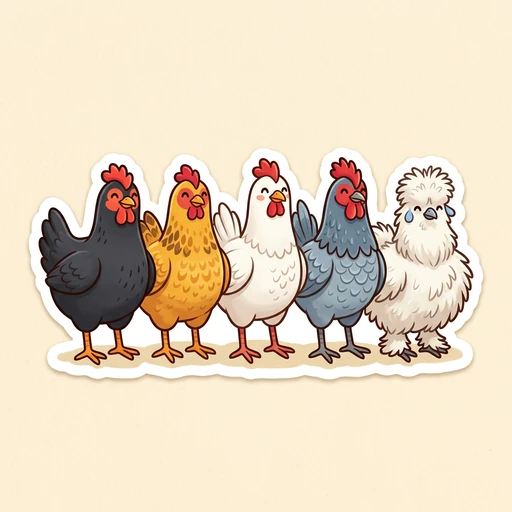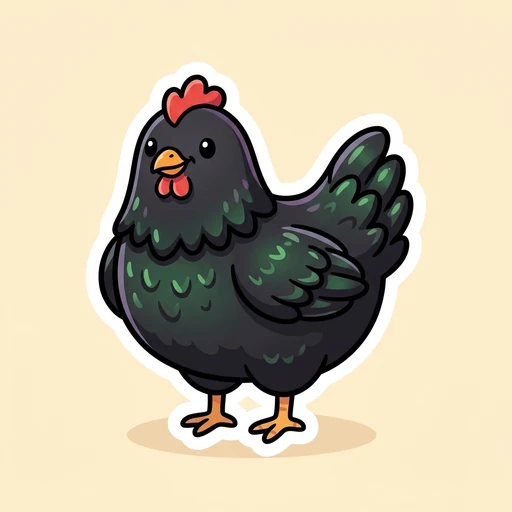
Australorp
"The overachiever."
~300/yr
Holds the world record — 364 eggs in 365 days. Glossy black with a green sheen, calm, quietly judging your productivity. Genuinely one of the best all-round backyard birds: heavy enough to be cold-hardy, docile enough for children, and a relentless layer.
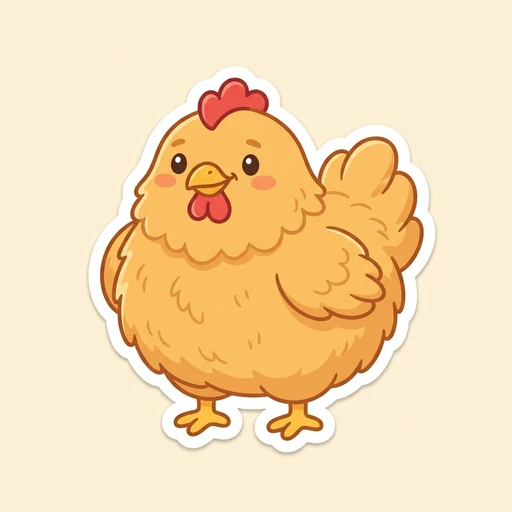
Buff Orpington
"The golden retriever."
~220/yr
Will sit on your lap. Will follow you to the mailbox. Will go broody and try to hatch anything, including golf balls and other hens. That fluffy coat makes her superb in cold and genuinely at risk in heat — see summer care.
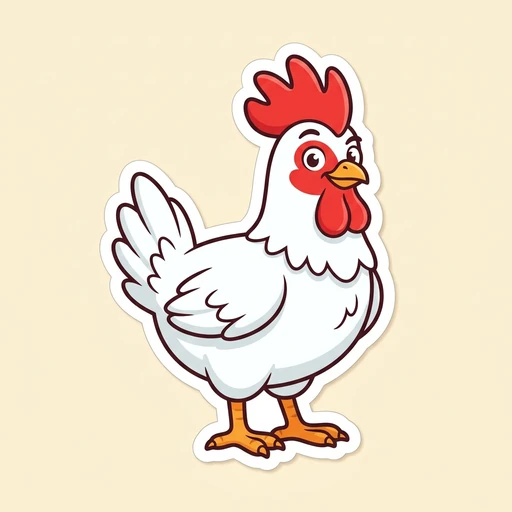
Leghorn
"The espresso shot."
~290/yr
The bird behind nearly every white egg in every shop. Industrial output on remarkably little feed, and zero chill — flighty, loud, and capable of clearing a two-metre fence. That big single comb is frostbite-prone. If a hen ever learns to open the feed bin, it'll be her.
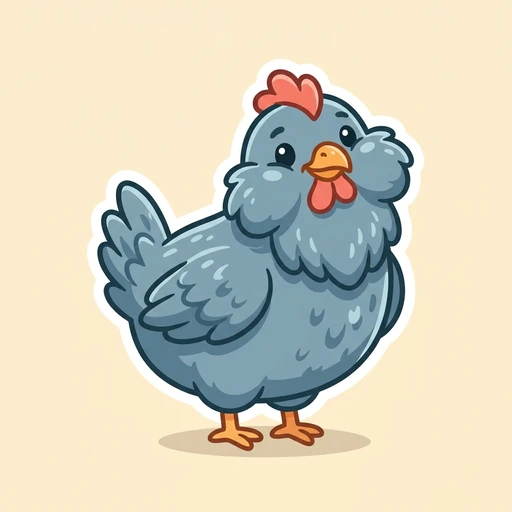
Ameraucana
"The indie artist."
~200/yr
Lays genuinely blue eggs — blue all the way through the shell, not painted on. Fluffy cheek muffs, a beard, and a pea comb that shrugs off frost. Looks permanently surprised by your life choices. Note that many birds sold as "Ameraucana" are actually Easter Eggers.
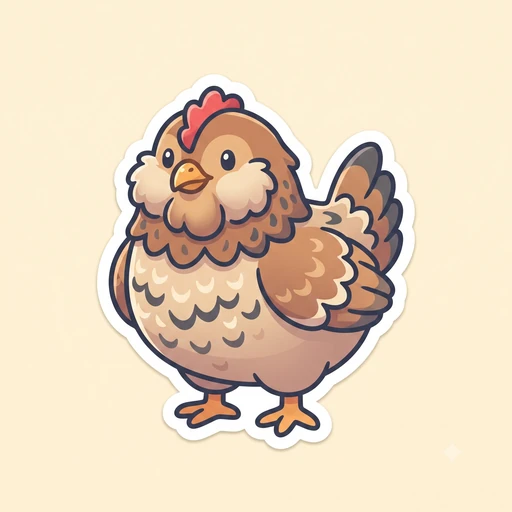
Easter Egger
"The surprise party."
~250/yr
Not a breed — a beautiful mutt carrying the blue-egg gene. Every hen lays one colour for her whole life, and you don't find out which until she starts. Blue? Green? Pink-ish? Roll the dice. Hardy, friendly, and no two birds look alike.
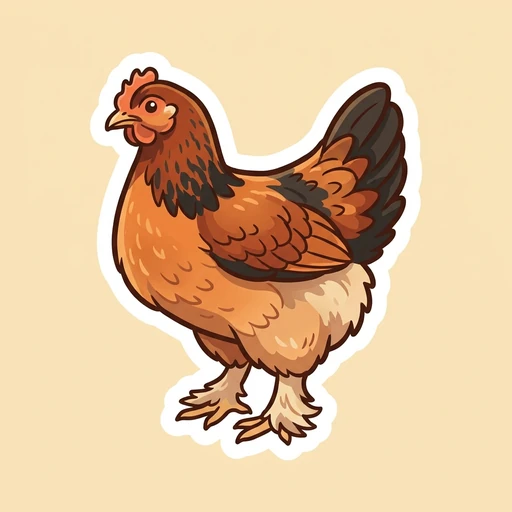
Marans
"The goth pastry chef."
~180/yr
Lays the darkest eggs in the chicken world — deep chocolate brown, sometimes almost terracotta. French, calm, and quietly handsome in copper and black. Egg colour fades through the laying season and returns after each moult, so the first eggs of spring are the showstoppers.
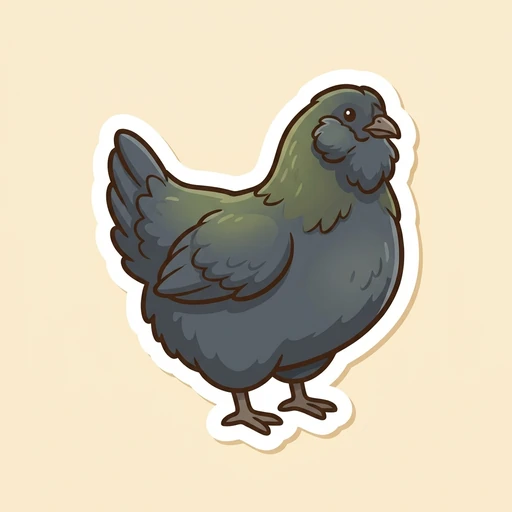
Olive Egger
"The colour experiment."
~200/yr
A blue-egg breed crossed with a dark-brown-egg breed. Blue shell plus brown coating equals olive green — the one egg colour you cannot get from any pure breed. Usually dark, bearded and cold-tolerant. Living proof of how shell colour actually works, explained on the eggs page.
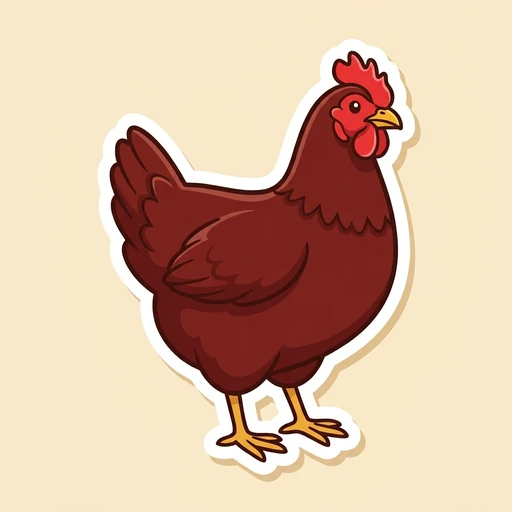
Rhode Island Red
"The reliable one."
~280/yr
The default backyard chicken for a century, and for good reason: dependable, hardy, forages well, and keeps laying through weather that stops other breeds. Deep mahogany red. Can be a bit bossy — often ends up running the pecking order.
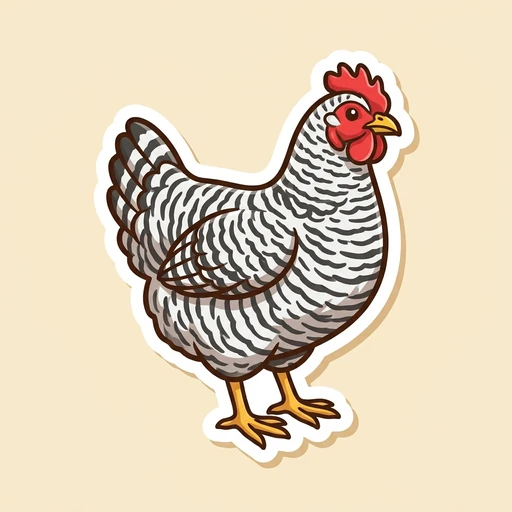
Barred Plymouth Rock
"The striped sweetheart."
~250/yr
Crisp black-and-white barring, an unflappable temperament, and steady laying well into winter. Probably the best first chicken there is — big enough not to be bullied, gentle enough for small children, and almost impossible to upset.
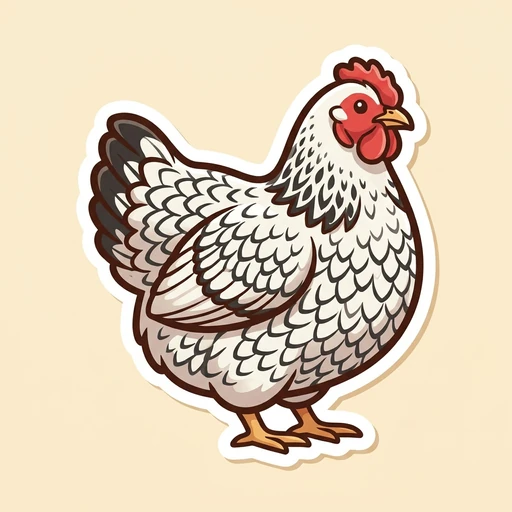
Silver Laced Wyandotte
"The one in the good coat."
~200/yr
Every feather outlined in black — genuinely the best-dressed bird in the run. A rose comb and dense plumage make her outstanding in bitter cold and poor in real heat. Self-possessed rather than cuddly; she'll tolerate you, on her terms.
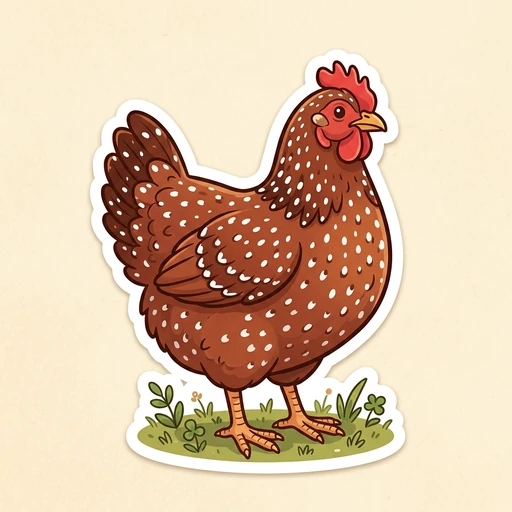
Speckled Sussex
"The nosy neighbour."
~250/yr
Mahogany scattered with white spots that increase with every moult, so she gets more speckled each year. Endlessly curious and will supervise every single thing you do in the garden. Excellent forager, superb winter layer, and one of the friendliest breeds going.
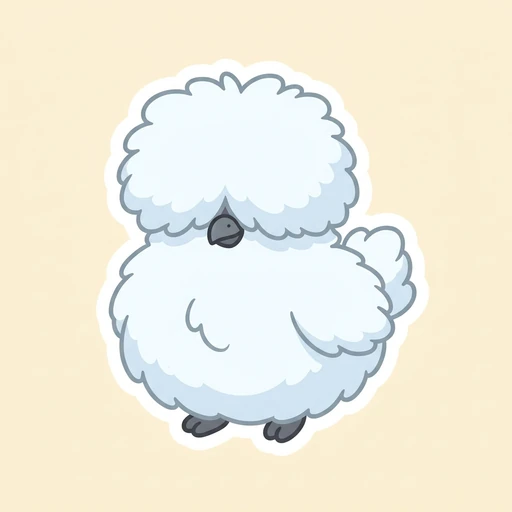
Silkie
"The cloud with feet."
~110/yr
Black skin, black bones, blue earlobes, five toes, and fur instead of proper feathers — she can't fly and can't see through her own hairdo. Goes broody constantly and will mother anything, which makes her the flock's designated incubator. 10/10 with kids. Those fur-like feathers aren't waterproof, so she needs shelter from rain.
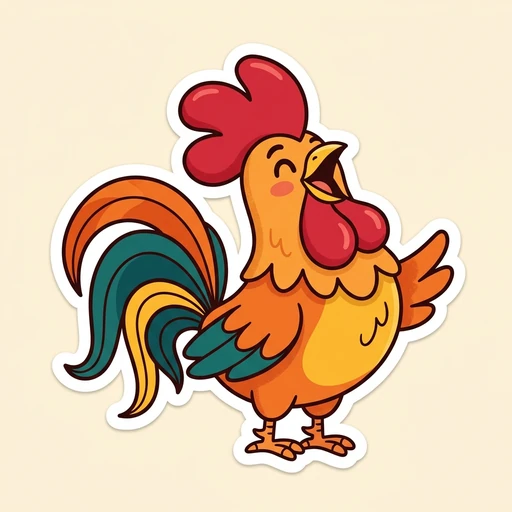
The Rooster
"The alarm clock nobody ordered."
0/yr
Not needed for eggs — hens lay perfectly well without one, and only fertilised eggs need a rooster. What he does provide is genuine flock security: he watches the sky, calls the alarm, finds food and gives it to the hens first, and will fight something much larger than himself. He will also announce sunrise, lunch, and absolutely nothing at 3 a.m. Banned in many towns; check your local rules first.
No breeds match that filter — try another.