1. Feed by life stage
Commercial feed is nutritionally complete. If your birds ate nothing else for their entire lives they would be perfectly healthy — which is worth remembering when the internet tries to sell you supplements.
The thing that changes with age is protein and calcium.
| Age | Feed | Protein | Calcium |
|---|---|---|---|
| 0–6 weeks | Chick starter | 18–20% | Low |
| 6–18 weeks | Grower / pullet | 16–18% | Low |
| 18 weeks+ (laying) | Layer | 16–17% | High (~4%) |
| Moulting adults | Grower or feather-fix | 18–20% | Offer separately |
| Mixed-age flock | Flock raiser / all-flock | ~18% | Offer separately |
Layer feed carries roughly four times the calcium of grower feed, because a hen puts about 2 g of calcium into every shell. In a bird that isn't laying — a chick, a growing pullet, a moulting hen, a rooster — that surplus calcium has nowhere to go and is processed by the kidneys. Sustained over months it causes kidney damage and gout. For a mixed flock, feed everyone all-flock and put oyster shell out separately so layers self-select.
Medicated or not?
Medicated chick starter contains amprolium, which limits coccidiosis — a gut parasite that is the leading killer of young chicks. It is not an antibiotic and it does not end up in eggs months later. If your chicks were vaccinated against coccidiosis at the hatchery, use unmedicated feed, because the medication would undermine the vaccine. Otherwise medicated starter is a reasonable default for a first flock.
Pellets, crumble or mash?
- Pellets — least waste, best for adults. The usual choice.
- Crumble — crushed pellets, easier for young or small birds, wastes more.
- Mash — powdered, the most waste of all, but useful wet or fermented.
2. The 90/10 rule
Everything that is not complete feed — every scrap, every treat, every handful of scratch — should total no more than about 10% of what they eat in a day.
This is the single rule that matters most on this page, and it is the one most commonly broken. Treats are low in protein and unbalanced. A flock filling up on kitchen scraps and corn is a flock eating less of the feed that actually contains what they need, and the results show up as thin shells, poor feathering, and hens that simply stop laying.
In practice, 10% for a standard hen is roughly two tablespoons of treats a day. It is much less than it feels like.
3. Treats they'll actually mob you for
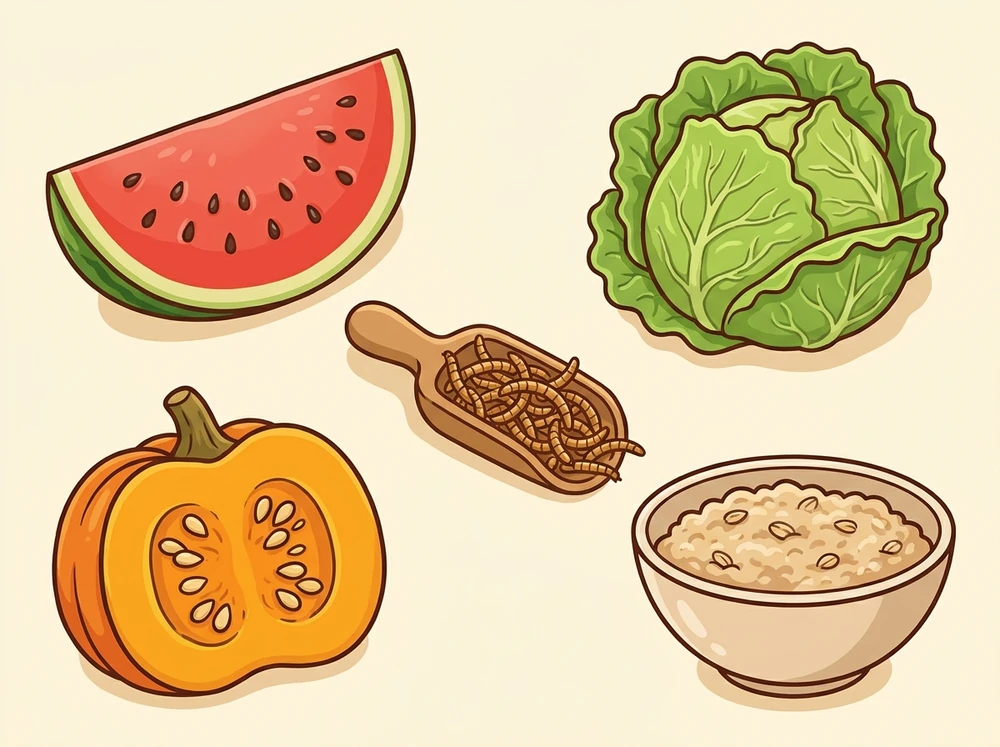
| Treat | Why it works |
|---|---|
| Leafy greens cabbage, kale, chard, lettuce | Hang a whole cabbage on a string and enjoy the piñata. Excellent boredom relief in winter runs. |
| Watermelon | Mostly water — summer air-conditioning you can eat. Freeze it on the hottest days. |
| Dried mealworms | Chicken currency. Shake the bag and become a deity. High protein, so genuinely useful during a moult. |
| Pumpkin & squash | Flesh and seeds both. A halved pumpkin keeps a flock busy for an hour. |
| Cooked oats, rice, pasta | Warm oats on a freezing morning produces genuine flock hysteria. |
| Scrambled eggs | Yes, it's weird. They don't think so, and it's the best protein boost available. Cook them — raw eggs teach egg-eating. |
| Berries, melon, apple no apple seeds in quantity | Fruit sugar is fine occasionally. |
| Herbs oregano, mint, parsley, basil | Enthusiastically eaten. Also pleasant strewn in nest boxes. |
| Garden bugs | The reason to let them into the vegetable beds after harvest. |
4. Genuinely toxic — never feed these
Most "dangerous for chickens" lists online are padded with things that are merely unhelpful. This list is the short one that actually matters, with the reason attached.
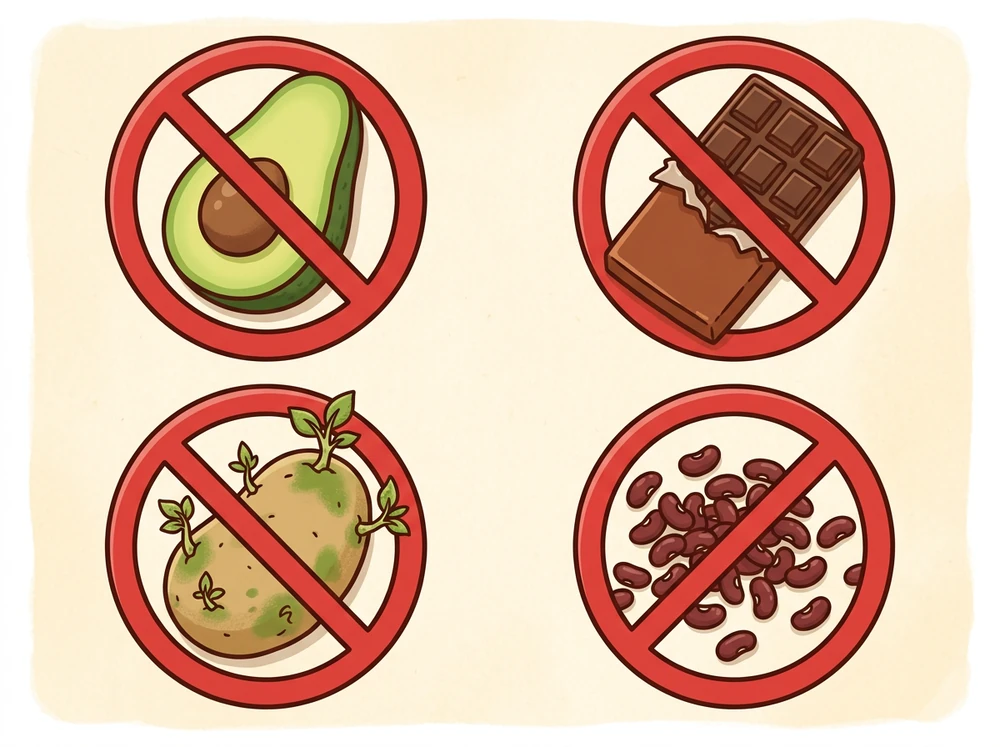
| Food | The actual problem |
|---|---|
| Avocado skin & pit | Persin — toxic to birds, causing heart damage. Concentrated in the skin and stone. A little flesh is usually tolerated but is not worth the risk. |
| Chocolate & coffee | Theobromine and caffeine. Cause heart arrhythmia in birds. Hard no. |
| Raw or dried beans | Phytohaemagglutinin — a lectin that is severely toxic raw. Even a handful of dry kidney beans can kill. Thoroughly cooked beans are fine. |
| Green potato & green tomato | Solanine, in the green parts and sprouts of nightshades. Ripe tomato flesh and cooked non-green potato are both fine. |
| Mouldy anything | Mycotoxins — a serious and underrated killer. The compost heap is not a buffet, and mouldy feed is worse than no feed. |
| Salty or heavily processed food | Birds handle salt poorly relative to their size. Crisps, cured meat and salted leftovers add up fast. |
| Raw eggs in shell form | Not toxic, but it teaches them to eat their own eggs — a habit that is close to impossible to break. |
| Onion in quantity | Large amounts can cause haemolytic anaemia. A trace in leftovers is not an emergency. |
In the UK and EU it is illegal to feed chickens kitchen scraps that have been in a domestic kitchen — the rule is about cross-contamination with meat, and applies even to vegetarian households. Garden produce that never entered the kitchen is fine. Rules differ elsewhere; check yours.
5. Grit vs oyster shell — not the same thing
This is the single most commonly confused topic in chicken keeping, and the two products do completely unrelated jobs.
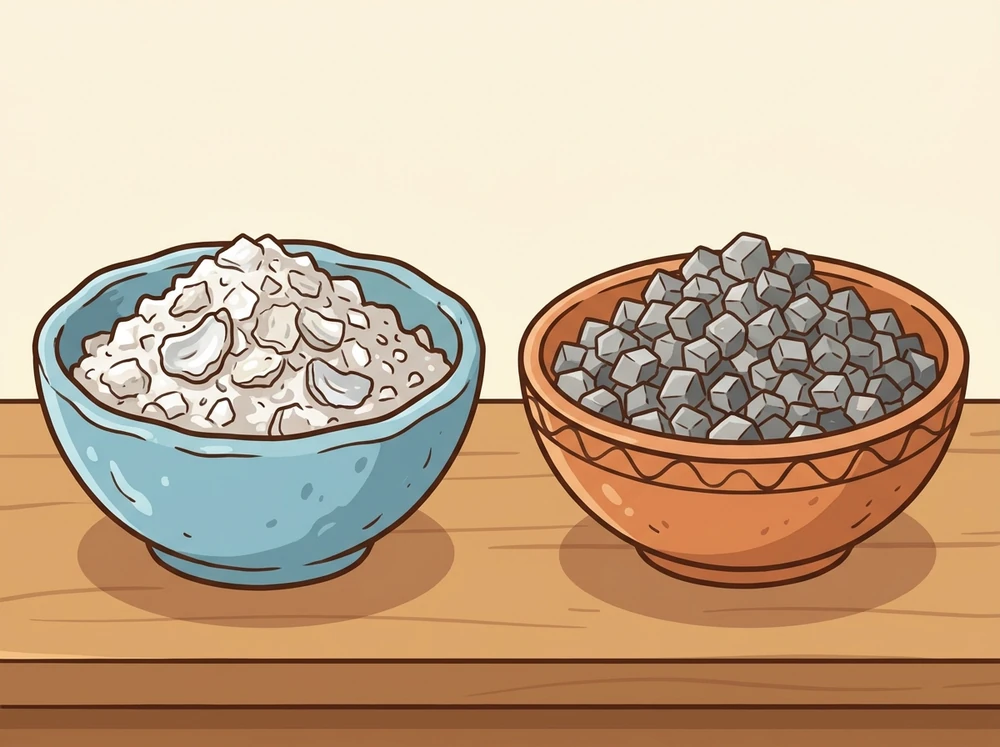
| Grit | Oyster shell | |
|---|---|---|
| What it is | Insoluble crushed granite | Soluble crushed shell — calcium carbonate |
| Job | Sits in the gizzard and grinds food. Chickens have no teeth; grit is their teeth | Dietary calcium for eggshells |
| Who needs it | Any bird eating anything other than commercial feed | Laying hens only |
| Free-ranging birds | Usually find their own small stones | Still need it offered |
Put both out in their own small dishes, always available. The hens take what they need and ignore the rest — they self-regulate calcium remarkably well. Thin or soft shells almost always mean the oyster shell dish is empty.
6. Water beats every supplement
A hen drinks roughly 500 ml a day, and considerably more in heat. An egg is about 75% water. Water deprivation stops laying faster than anything else on this page — a single hot day without water can halt a flock's production for a fortnight.
- Clean it daily. Open founts become green soup within days. Nipple waterers stay clean and are worth the small effort of teaching.
- More than one source. A bullying hen can guard a single waterer.
- In heat, add a second waterer in deep shade and drop ice in it. See summer care.
- In freezing weather, a heated base or twice-daily swaps. Chickens cannot eat snow for hydration.
- Apple cider vinegar — a splash is popular and mildly useful for gut pH, but never in galvanised metal containers, where it leaches zinc.
7. Scratch, warm mash and fermented feed
Scratch is a treat, not a food
Scratch grains — usually cracked corn, wheat and barley — are the chicken equivalent of sweets. Around 8% protein and no balanced minerals. Birds love it, and it is genuinely useful as a training tool and boredom-breaker, but it belongs firmly inside the 10%.
A handful thrown into deep bedding in winter gets the flock scratching for an hour, which is both entertainment and free bedding turnover.
Warm mash
Layer pellets plus warm water, stirred to porridge. A cold-morning ritual that flocks lose their minds over. Nutritionally it is just their normal feed, which is exactly why it is a good treat — it does not dilute the diet at all.
Fermented feed
Cover feed with water, leave 2–3 days at room temperature, stirring daily, until pleasantly sour. Claimed benefits are better digestibility and gut flora; the reliably measurable one is less feed consumed for the same output, because the birds waste less. Discard immediately if it smells rotten rather than tangy, and never let it go mouldy.
8. How much, and how to stop wasting it
A standard laying hen eats roughly 100–150 g of feed a day — call it 45–50 kg a year. Bantams eat around half.
Feed free-choice: keep the feeder full and let them self-regulate. Chickens are good at eating what they need and poor at overeating complete feed. They are excellent at wasting it, though — billing feed out of an open tray onto the floor is a favourite hobby.
- Hanging feeders at back height cut waste dramatically — they can reach in but not fling sideways.
- Never leave feed out overnight. This is what brings rats and, eventually, everything that eats rats.
- Store feed in sealed metal or hard plastic bins. Rodents chew through paper sacks in one night, and damp feed grows mould.
- Buy feed you'll use within a month. Vitamins degrade; the bargain sack that sits for a season is not a bargain.
Feeding changes with the weather — protein during the autumn moult, water logistics in summer and winter. That's all in a year in the yard. Or see which breeds turn feed into the most eggs over in the breed directory.