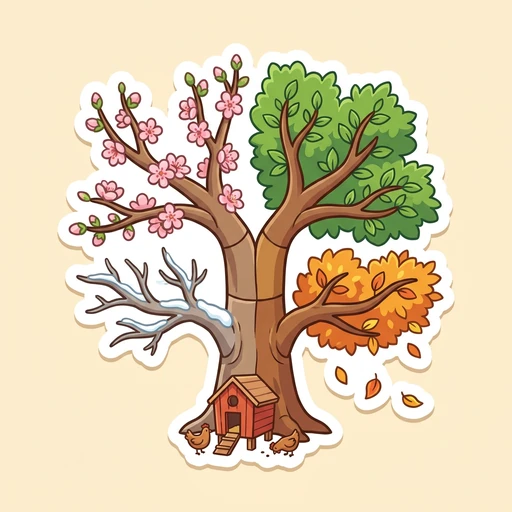
Spring — peak season
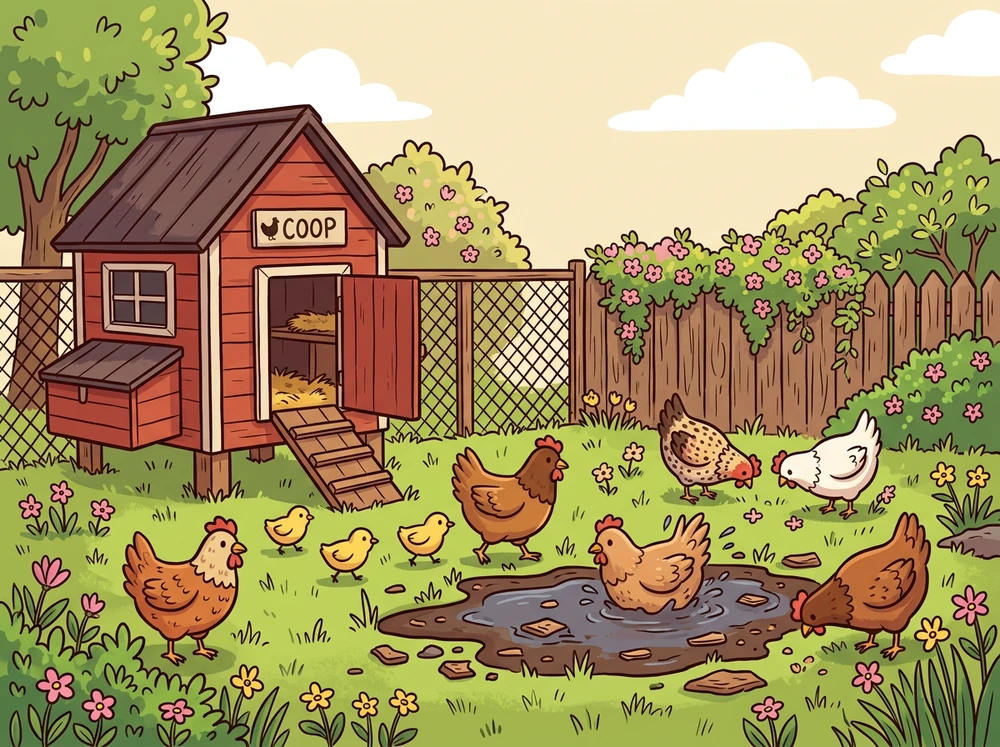
Lengthening days switch laying back on. Expect your best production of the year, and expect it suddenly.
- Check nest boxes twice a day. At peak, a box gets used repeatedly, and eggs left sitting get dirty, cracked or eaten.
- Deep-clean the coop. Strip bedding, scrape the roosts, scrub, dry thoroughly. The hens will supervise closely and be no help whatsoever.
- Mud management. A wet run becomes a bacterial soup and causes foot problems. Coarse wood chips — not straw, not sand — are the fix. They drain, compost slowly, and save your sanity.
- Check for mites as temperatures rise. See below.
- Chick season. If you're adding birds, quarantine newcomers 2–4 weeks and read the introduction rules before mixing them.
- Broodiness begins. Some hens will decide to sit. If you have no rooster, those eggs will never hatch and she'll starve herself sitting on them — break the broodiness by removing her from the nest repeatedly, or give her a cool, wire-floored space for a few days.
Summer — heat is the real danger
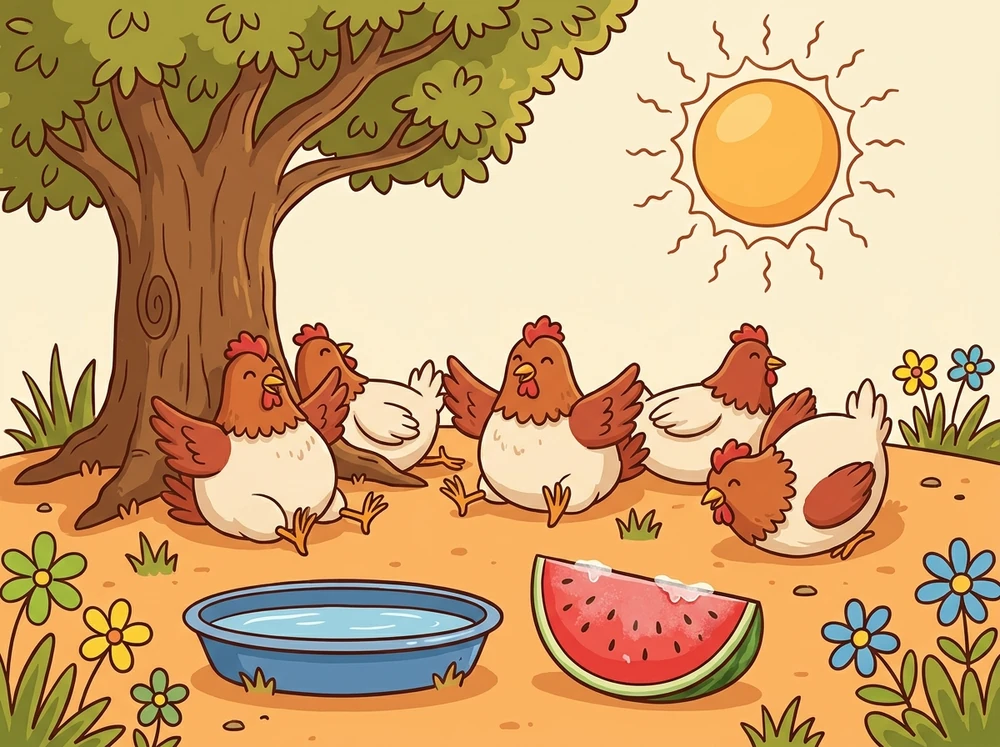
A hen wears a down coat she cannot take off and has no sweat glands. She cools by panting and by radiating heat through her comb, wattles and feet. Above roughly 32 °C (90 °F) birds are under real strain; above 38 °C (100 °F) deaths happen quickly, especially in heavy, fluffy or dark-feathered breeds. Cold-hardy breeds like Orpingtons and Wyandottes suffer the most.
What actually helps
- Deep shade, all day. Not dappled — solid. A tarp over part of the run, or a shrub, changes survivability.
- Multiple water sources in the shade. Add ice. Cold water is drunk more readily than warm.
- A shallow pan of water for standing in. Chickens dump heat through their feet, and some will happily paddle.
- Frozen treats — watermelon is the classic, and it's mostly water anyway.
- Airflow. Open the coop up as much as security allows; a fan aimed across the coop rather than at the birds helps a great deal.
- Feed in the cool hours. Digestion generates heat, so birds naturally eat less midday. Expect smaller eggs and thinner shells during a heatwave.
- Damp the ground in shaded areas. Evaporation cools the whole space, and they'll dig into the cool earth.
Signs of heat stress, in order of severity
- Wings held out from the body
- Panting, beak open
- Pale, floppy comb
- Lethargy, standing still, unresponsive
- Collapse
At stage 4 or 5, act immediately: move the bird to shade and stand it in cool — not ice-cold — water up to its belly. Shocking an overheated bird with icy water can kill it.
Autumn — everyone looks terrible
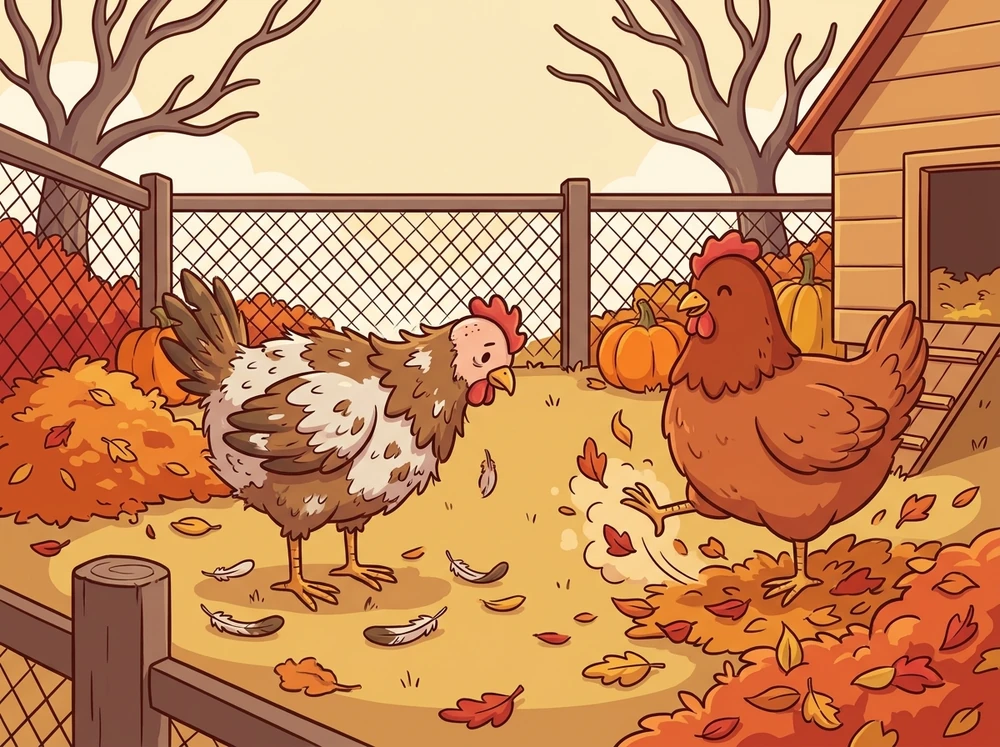
As days shorten, two things happen at once: laying slows down, and the birds moult.
The moult
Chickens replace their entire plumage annually, usually in autumn of their second year and every year after. Feathers are about 85% protein, so regrowing a whole coat is metabolically enormous — which is exactly why hens stop laying while they do it. A bird cannot build feathers and eggs simultaneously.
- Raise protein to 18–20% for the duration — switch to grower or an all-flock feed, and lean on mealworms and scrambled egg. See feed by life stage.
- Don't handle them. New feathers emerge as "pin feathers" with a live blood supply. They are genuinely painful and bleed freely if broken.
- Expect 4–16 weeks. Fast moulters look dreadful for a month and recover quickly; slow moulters look slightly shabby for a season.
- A hard moult is a good sign. Counter-intuitively, birds that drop everything at once and regrow fast tend to be the better layers.
The rest of autumn
- Eggs slow or stop. This is daylight, not illness. Production picks up again after the solstice.
- Rake fallen leaves into the run. Free entertainment, free bedding, free bugs underneath.
- Do the winter prep now while it's still pleasant: check the roof, clear the gutters, service the ventilation, sort out a water plan for freezing days.
- Predator pressure rises as wild food gets scarce and migrating hawks pass through. A tarp or netting over part of the run gives the flock somewhere to bolt.
Winter — ventilation, not heat
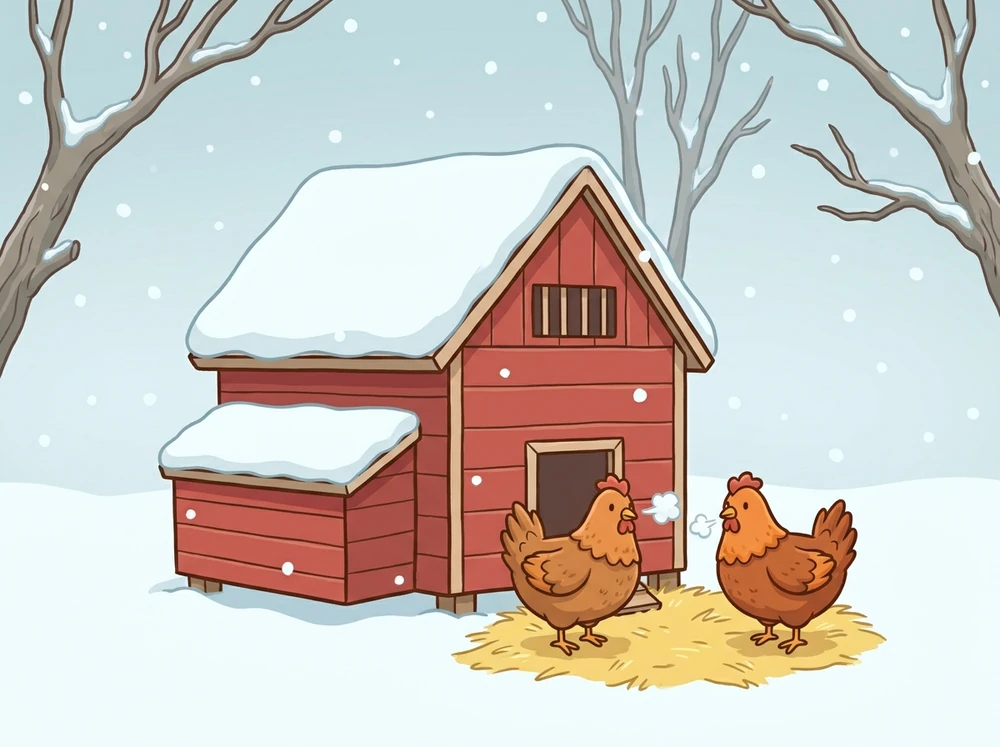
Chickens handle cold far better than heat. A healthy, dry, draft-free bird is comfortable well below freezing — they are wearing the best insulation in the animal kingdom.
Birds exhale a surprising amount of water vapour, and droppings release more. In a sealed "cosy" coop that humidity condenses on combs and wattles overnight and freezes. The counter-intuitive fix is more ventilation, not less — vents up high, above roosting height, so damp air escapes without blowing across the birds. A coop that smells of ammonia in the morning is badly ventilated and actively harming their lungs.
Coop fires are common and they are total losses. Beyond the fire risk, a heated coop prevents birds acclimatising, so a power cut on the coldest night of the year finds them completely unprepared. If you genuinely need supplemental heat for a vulnerable bird, use a flat-panel radiant heater rated for the purpose — never a suspended bulb.
The winter checklist
- Water is the whole job. A heated base, or swapping founts twice a day. Chickens will not eat snow to hydrate and can dehydrate badly in freezing weather.
- Wide, flat roosts — a 5×10 cm board laid flat lets them sit on their own feet and cover their toes with feathers. Round bars leave toes exposed.
- Petroleum jelly on large single combs before the coldest nights. Roosters and big-combed breeds like Leghorns are the vulnerable ones.
- Deep litter. Let bedding build up over winter; it composts slowly and generates gentle warmth. Turn it occasionally, and add a handful of scratch to make the birds do it for you.
- Clear a patch of ground. Chickens hate walking on snow and will simply refuse. Straw or wood chips over a cleared area gets them outdoors.
- Warm oatmeal breakfast on the worst mornings. Not nutritionally necessary; watching the flock lose its collective mind is reason enough.
- Block wind at bird height — a windbreak on the prevailing side of the run matters more than insulation.
Supplemental lighting — the honest argument
Laying is driven by day length. Below roughly 14 hours of light, most hens stop. Adding a timed light in the coop to reach 14–16 hours will keep them laying through winter, and commercial operations do exactly this.
Whether you should is genuinely contested:
- For: eggs year-round; the hen's total lifetime egg count is thought to be roughly fixed, so you're front-loading rather than creating extra work for her.
- Against: the winter break lets a hen rebuild condition and finish her moult properly. Many keepers find lit birds burn out a season earlier.
If you do it: add light in the morning, never the evening. A light that cuts out at night leaves birds stranded off the roost in sudden darkness. And keep it modest — a few watts is plenty.
Mites and lice, all year
Every flock meets these eventually. Wild birds bring them in.
- Check at night with a torch, when red mites leave the woodwork to feed. Look at the vent and under the wings, and along roost undersides and crevices.
- Signs: pale combs, reluctance to enter the coop at dusk, restless birds, dropping production, tiny grey or red specks on skin, clusters of pale eggs at feather bases.
- Prevention is a dust bath. A dry patch of loose earth — under the coop, in a tub, wherever — is how chickens manage their own parasites. Add wood ash if you like; it works.
- Treatment: strip and burn or bin the bedding, scrub the coop, treat crevices, and treat the birds. Red mite lives in the structure, not on the bird, so treating birds alone achieves nothing.
Cold-hardiness and heat tolerance vary enormously by breed — the breed directory flags both. And the seasonal swing in laying is explained further on the eggs page.