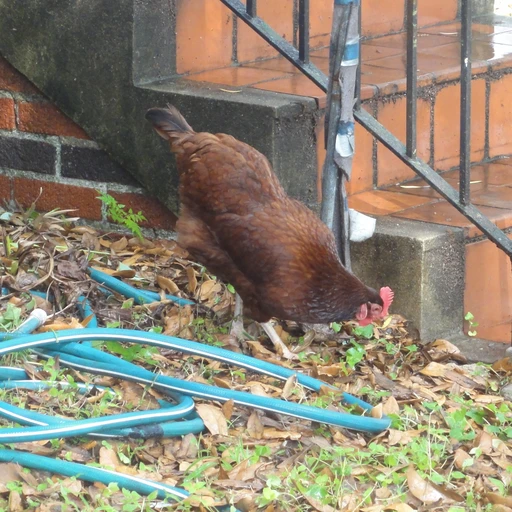

Quick facts
| Adult hen weight | About 6½ lb |
|---|---|
| Comb | Single (rose in some strains) |
| Eggs per year | ~280 |
| Shell color | Brown |
| Temperament | Bossy, hardy |
| Cold hardiness | Excellent |
| Heat tolerance | Good |
About the Rhode Island Red
The default backyard chicken for a century, and for good reason: dependable, hardy, forages well, and keeps laying through weather that stops other breeds. Deep mahogany red. Can be a bit bossy — often ends up running the pecking order.
Cold and heat tolerance
Rhode Island Reds are tough in the cold. Their dense, mahogany plumage and moderate comb size let them lay through winters in the Northeast, Midwest and Mountain West. Standard care applies: a dry coop, ventilation above the roost, and unfrozen water.
In heat they are average to good. Their dark feathers take up some sun, so in the South give them shade and cool water once it passes 90 °F. They forage well in warm weather and adapt more easily than the heavy, fluffy breeds.
Eggs and laying
Expect about 250–280 large brown eggs a year, starting at 18–22 weeks. Reds frequently keep laying through cold, short days when other breeds stop.
Temperament and care
Reds are active, hardy foragers and tend to be bossy. Hens are usually fine; roosters can be aggressive, so do not rely on a Red cockerel around children. In a mixed flock a Red will often rise to the top of the pecking order, so give gentler breeds extra feeders and hiding spots to avoid bullying.
Who they're for
the classic brown-egg backyard bird, an egg machine — output is the whole point, built for real winters. Every flock is a sitcom cast — the Rhode Island Red is the reliable one.
Rhode Island Red FAQ
How many eggs do Rhode Island Reds lay?
A good Rhode Island Red lays about 250–280 large brown eggs a year, including through much of the winter.
Are Rhode Island Reds aggressive?
Hens are generally fine but can be bossy. Roosters are the main concern and can be aggressive, so treat them with caution around children.
Can Rhode Island Reds handle winter?
Yes. They are cold-hardy and keep laying in winter when other breeds slow down, as long as the coop is dry and well ventilated.