
Quick facts
| Adult hen weight | About 7 lb |
|---|---|
| Comb | Single |
| Eggs per year | ~250 |
| Shell color | Brown |
| Temperament | Curious, friendly |
| Cold hardiness | Excellent |
| Heat tolerance | Good |
About the Speckled Sussex
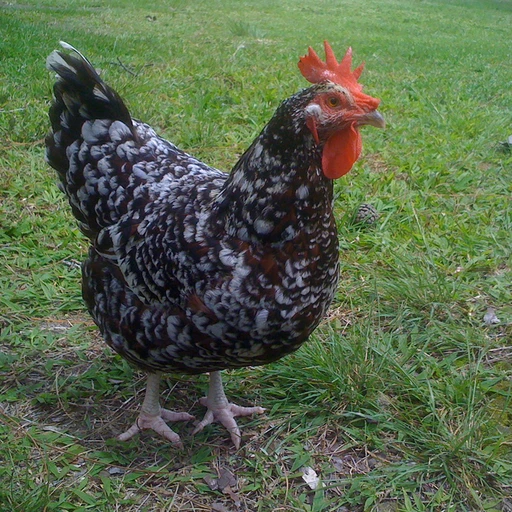
Mahogany scattered with white spots that increase with every molt, so she gets more speckled each year. Endlessly curious and will supervise every single thing you do in the garden. Excellent forager, superb winter layer, and one of the friendliest breeds going.
Cold and heat tolerance
Speckled Sussex hens handle northern winters comfortably. They are heavy with soft, full plumage and keep laying through cold, short days. The single comb is medium sized, so a dry, ventilated coop is enough to keep frostbite away in most regions.
They also cope with warm weather better than most dual-purpose breeds. In the South, the usual summer rules apply: shade, airflow and cool water once temperatures pass 90 °F. They are active foragers and do best with space to roam.
Eggs and laying
Sussex lay about 200–250 light brown to cream eggs a year, starting around 20–22 weeks. They are one of the better winter layers among the heritage breeds. Many hens go broody and make excellent mothers.
Temperament and care
The Speckled Sussex is curious and sociable. She will follow you around the yard and supervise whatever you are doing, and she is a good match for children. She is a patient flock member, rarely bullying. The speckles increase with each molt, so a hen looks quite different at three years than at one.
Who they're for
the classic brown-egg backyard bird, great with kids and visitors who want to pet something, built for real winters. Every flock is a sitcom cast — the Speckled Sussex is the nosy neighbor.
Speckled Sussex FAQ
Are Speckled Sussex good layers?
Yes. They lay about 200–250 light brown eggs a year and keep laying into winter.
Are Speckled Sussex friendly?
Very. They are curious and sociable and tend to follow keepers around the yard.
Why do Speckled Sussex get more spots over time?
The white speckles increase with each molt, so hens look more speckled every year.