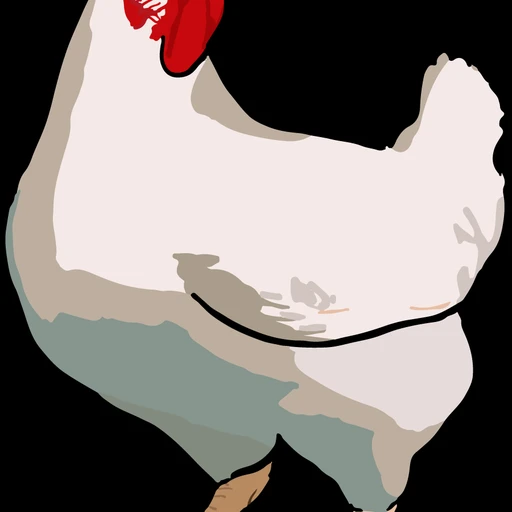
Quick facts
| Adult hen weight | About 4½ lb |
|---|---|
| Comb | Large single |
| Eggs per year | ~290 |
| Shell color | White |
| Temperament | Flighty, loud |
| Cold hardiness | Poor (comb) |
| Heat tolerance | Excellent |
About the Leghorn
The bird behind nearly every white egg in every shop. Industrial output on remarkably little feed, and zero chill — flighty, loud, and capable of clearing a 6-foot fence. That big single comb is frostbite-prone. If a hen ever learns to open the feed bin, it'll be her.
Cold and heat tolerance
The Leghorn is the heat specialist. A light body, white feathers and a big comb that sheds heat make her the best choice for the Deep South, Texas and the Desert Southwest. She keeps laying through summers that stall heavier breeds.
Cold is her weakness, and it is the comb. That large single comb is prone to frostbite when it is damp and the temperature falls toward freezing. In northern states, vent the coop high above the roost to pull out moisture and keep waterers away from the sleeping area. Some keepers rub petroleum jelly on combs on the coldest nights, but dry air matters more.
Eggs and laying
No breed turns feed into eggs more efficiently. A Leghorn starts early, often at 16–18 weeks, and lays roughly 280–300 large white eggs a year with little interest in sitting on them. The trade-off is that production tapers faster than in heavier breeds, so plan on strong laying for about two years.
Temperament and care
Leghorns are active, loud and flighty. They forage hard, fly over low fences, and do not enjoy being picked up. Give them a tall run or a covered one, roost bars they can reach easily, and a calm routine. They are not a lap chicken, but they are very rarely broody, which suits keepers who want eggs without sitting hens.
Who they're for
the classic white-egg layer, an egg machine — output is the whole point. Every flock is a sitcom cast — the Leghorn is the espresso shot.
Leghorn FAQ
Do Leghorns lay white eggs?
Yes. Leghorns lay large white eggs, and they are the source of most white eggs in grocery stores.
Are Leghorns good for cold climates?
Not especially. Their large combs are prone to frostbite, so they need a well-ventilated, dry coop in northern winters.
Do Leghorns need a tall fence?
Yes. They are light and athletic, and many can clear a 6-foot fence if they want to, so cover the run or use tall fencing.