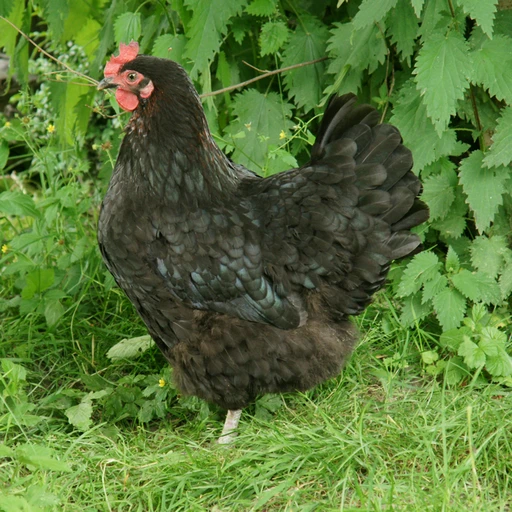

Quick facts
| Adult hen weight | About 6½ lb |
|---|---|
| Comb | Single |
| Eggs per year | ~180 |
| Shell color | Dark chocolate |
| Temperament | Calm, quiet |
| Cold hardiness | Very good |
| Heat tolerance | Good |
About the Marans
Lays the darkest eggs in the chicken world — deep chocolate brown, sometimes almost terracotta. French, calm, and quietly handsome in copper and black. Egg color fades through the laying season and returns after each molt, so the first eggs of spring are the showstoppers.
Cold and heat tolerance
Marans are hardy in cold. Dense feathering and a medium single comb carry them through northern winters, though some strains have feathered legs that collect snow and mud, so keep the run dry and check feet in winter.
In heat they are average to good. In the South, give shade and cool water once it passes 90 °F. Dark feathers hold some heat, but the breed is not as heat-sensitive as the heaviest fluffy breeds.
Eggs and laying
Marans are known for the darkest eggs in the chicken world, but color varies by strain and hen. Pigment is thickest at the start of a laying cycle and fades through the season, then returns after the molt. Expect about 150–200 eggs a year, starting later than many breeds, often around 24 weeks. If egg color is the goal, buy from a breeder selecting for dark eggs.
Temperament and care
Marans are calm, quiet and relatively easy to keep. They are not noisy, fit into a flock well, and are not usually aggressive. Because the dark shell is the main attraction, skip scrubbing them, because rubbing a fresh egg can lift some of the color.
Who they're for
a rainbow in the egg basket. Every flock is a sitcom cast — the Marans is the goth pastry chef.
Marans FAQ
How dark are Marans eggs?
They are the darkest brown eggs of any chicken, from chocolate to terracotta, though color varies by strain and fades during the laying season.
How many eggs do Marans lay?
About 150–200 a year, and they often start later than most breeds.
Do Marans tolerate cold?
Yes. They are hardy, though feathered legs can collect snow and mud, so keep the run dry.